
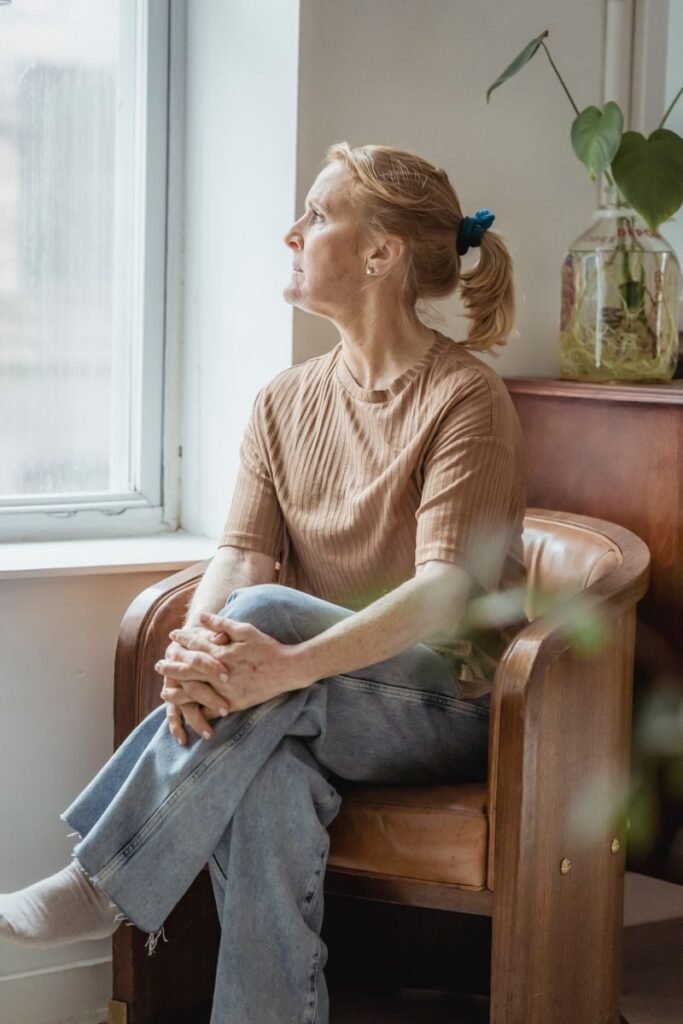
You Thought This Would Feel Different
.Pregnancy and new parenthood are supposed to feel like the happiest time of your life. That’s what everyone says. That’s what the photos look like.
But maybe it doesn’t feel like that. Maybe it feels like anxiety that won’t switch off. A sadness you can’t explain. A disconnection from your baby, or from yourself, that nobody warned you about. An exhaustion that goes deeper than sleep.
You’re not doing it wrong. You’re not a bad mother. And you’re not alone in feeling this way.
At MK Counseling Services, we offer perinatal mental health therapy across Pennsylvania for women navigating the emotional reality of pregnancy, postpartum, and everything in between, without judgment. Our specialist, Alaina Schrader, is currently full but accepting waitlist inquiries.
What Perinatal Mental Health Actually Is It's More Than Baby Blues
Most people have heard of postpartum depression. But perinatal mental health covers a much wider range of experiences, and most of them never get talked about.
You might be dealing with:
- Prenatal anxiety. Worry during pregnancy that feels constant, intrusive, or hard to control. Fear about the birth, the baby's health, your ability to cope.
- Postpartum depression. A persistent low mood, tearfulness, or flatness that doesn't lift after the first few weeks.
- Postpartum anxiety. Racing thoughts, hypervigilance, an inability to switch off the worry. Often missed because it looks like "being a good mother."
- Intrusive thoughts. Unwanted, distressing thoughts about harm coming to your baby. These are far more common than anyone admits, and they don't mean you'll act on them.
- Birth trauma. A difficult or frightening birth experience that stays with you. Flashbacks, avoidance, a reaction to reminders that doesn't make sense to people who weren't there.
- Perinatal loss. Grief after miscarriage, stillbirth, or infant loss that deserves real support, not just time.
- Rage. An anger that arrives fast and feels disproportionate. Rarely discussed. Very common.
- Not bonding. Not feeling the rush of love you expected. Feeling distant from your baby. The shame of this keeps many women completely silent.
- Identity loss. The disorientation of no longer recognizing yourself. Who you were before doesn't fit anymore, and who you are now isn't clear yet.
The Part Nobody Says Out Loud
You're Not a Bad Mother
The reason most women don’t reach out is not because they don’t need support. It’s because reaching out feels like an admission.
Like if you say it out loud, that you’re struggling, that this isn’t what you expected, that some days you don’t feel like yourself at all, someone will confirm what you’re afraid of. That you’re not cut out for this. That you should be grateful. That you’re failing.
None of that is true.
Loving your baby and struggling at the same time, both are true. They don’t cancel each other out. And struggling doesn’t say anything about the kind of mother you are or will be.
Getting support is one of the best things you can do for your family. Not because it fixes you, but because you deserve support too.
Our Approach
How We Work With Perinatal Mental Health
Alaina Schrader brings a feminist, trauma-informed, and deeply non-judgmental approach to perinatal mental health work. she draws from Polyvagal Therapy to help regulate the nervous system responses that underlie perinatal anxiety, hypervigilance, and the emotional intensity that comes with new parenthood.
From Parts Work to help you understand the different parts of yourself that are showing up in this transition: the one that’s grieving who you were, the one that’s terrified, the one that’s trying to hold it all together. And from person-centered skill building that meets you exactly where you are, not where a textbook says you should be.
Sessions are via telehealth, which means you can join from home, during nap time, without arranging childcare. You don’t have to leave the house to get support. There’s no agenda beyond what you’re ready to bring. No judgment about how you’re feeling. Just a space that’s entirely yours.

Who Alaina sees for perinatal mental health support.
Alaina Schrader, LPC, NCC, PMH-C is a Perinatal Mental Health Certified therapist at MK Counseling. She works with women at every stage of the perinatal period, from pregnancy through the postpartum months and beyond.
Her practice is LGBTQ+ affirming, inclusive of all paths to parenthood and all family structures.
She works with women navigating:
- Pregnancy anxiety and prenatal mental health
- Postpartum depression, anxiety, and OCD
- Birth trauma and PTSD
- Perinatal loss and grief
- The identity shift of new parenthood
- ADHD and neurodivergence in the perinatal period
Alaina is currently full but accepting waitlist inquiries. When space opens, waitlist clients are contacted first.
What Perinatal Mental Health Looks Like at MK Counseling Services.
All sessions with Alaina are via telehealth, no commute, no waiting room, no arranging childcare. You can join from your living room, your bedroom, or wherever you have a few minutes of privacy.
Your first session is a conversation. Alaina will ask about where you are right now, what’s been going on, and what you’re hoping for. You don’t need to have it together before you show up. That’s the whole point of being there.
Sessions are flexible and built around what you need week to week. Some sessions will focus on the immediate, managing the anxiety, getting through the days. Others will go deeper into what’s underneath.
Alaina accepts Aetna, Anthem, Highmark BCBS, Cigna, United/Optum, and UPMC.
Perinatal mental health support is a good fit if:
- You're pregnant or postpartum and something doesn't feel right
- You've been dismissing your own struggles because you think they're not bad enough to deserve help
- You're having thoughts or feelings you're too ashamed to say out loud
- You feel like you've lost yourself and you're not sure how to find your way back
- You want support that's specific to this season of life, not generic therapy
You don’t have to hit a breaking point before you’re allowed to ask for help. If something brought you here, that’s enough.
As Mother You Deserve Support Too
This season is hard. Reaching out doesn’t mean you’re failing. It means you’re taking care of yourself so you can take care of your family. Alaina is currently full, but joining the waitlist means you’ll be first to know when space opens up. Getting support is one of the best things you can do for your family. And for yourself.